
Process Modelling

Mansim helps process owners, technology developers, manufacturers and engineering teams understand how an industrial process will perform before committing to equipment changes, pilot trials or capital investment.
We combine system-level process simulation with thermodynamic modelling, equipment sizing, high-fidelity CFD, optimisation and safety analysis. From early feasibility and scale-up to debottlenecking, retrofit and compliance, our process modelling services turn complex interactions between materials, energy, equipment and operating conditions into clear engineering and commercial decisions.

15+ years
of world-class computational simulation
250+
peer-reviewed publications underpinning our work
200+
organisations supported
25+
countries served
ISO 9001
certified quality processes
What is Process Modelling?
Process modelling creates a mathematical representation of how materials and energy move, react, separate, heat, cool and change state across equipment or an entire plant. It uses mass and energy balances, thermodynamics, reaction behaviour, equipment performance and operating data to predict outputs such as product composition, yield, utility use, temperature, pressure, emissions and process capacity. Unlike CFD, which resolves local three-dimensional flow, process modelling connects unit operations and streams across the overall system. The two approaches can be coupled when plant-level performance depends on local mixing, residence time, heat transfer or combustion, allowing design options to be evaluated before modifying a pilot or operating facility.
Process modelling and CFD: when are both needed?
Process modelling provides the plant-wide view: what enters and leaves each unit, how much energy is required and whether the overall process can meet its performance target. CFD provides the local view inside equipment, showing where poor mixing, recirculation, temperature variation, particle behaviour or inadequate residence time affects that system-level result.
Mansim combines the two where necessary. For the Circtec thermal oxidiser, for example, Aspen Plus process predictions were compared with detailed combustion CFD before the proposed configuration was implemented.


When is Process Modelling Used
01
Process Feasibility and Concept Development
Assess whether a new process or technology can meet its technical, capacity and performance targets before committing to pilot-scale or commercial investment.
02
Process Optimisation and Debottlenecking
Identify constraints affecting throughput, yield, product quality or utility consumption, and evaluate changes to improve overall plant performance.
03
Scale-Up from Laboratory to Industrial Operation
Predict how changes in flow, heat transfer, mixing and residence time affect performance when moving from laboratory or pilot scale to full production.
04
Equipment and Process Route Comparison
Compare alternative equipment configurations, operating conditions and process routes before procurement, retrofit or capital investment.
05
Energy, Decarbonisation and Resource Efficiency
Evaluate hydrogen recovery, carbon capture, heat recovery, waste-to-resource and other low-carbon process integrations to reduce energy use and operating costs.
06
Process Safety, Compliance and Design Assurance
Quantify operating limits and performance against requirements for purity, temperature, pressure, emissions and residence time, supporting HAZOP, design review and compliance decisions.

Process Modelling Applications

Chemical and Process Manufacturing
Analyse reactors, stirred vessels, dryers, furnaces, separation equipment and connected process lines. Applications include debottlenecking, throughput improvement, mixing, residence time, product consistency, heat recovery and equipment modification.

Energy, Hydrogen and Carbon Capture
Model gasification, syngas conditioning, hydrogen separation, pressure-swing adsorption, carbon capture, heat recovery and process integration. Compare process routes while balancing purity, energy demand, emissions and equipment requirements.

Waste, Recycling & Water Treatment
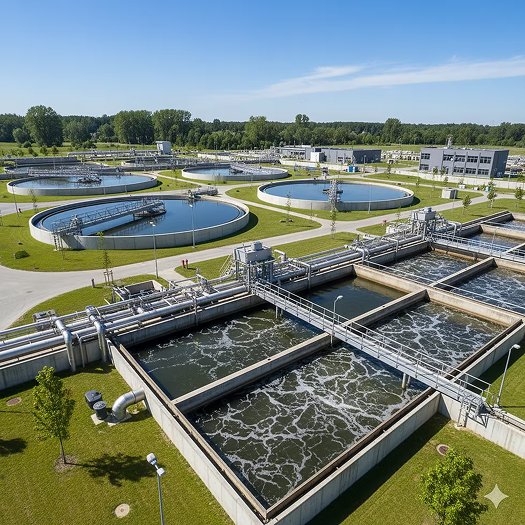
Assess pyrolysis and waste-to-resource systems, thermal oxidisers, gasifiers, wastewater-treatment units, aeration, filtration and microplastic-capture technology. Models can support equipment scale-up, environmental performance and reliable industrial deployment.

Oil, Gas & Pipeline Infrastructure
Evaluate gas dehydration, impurity removal, dew-point control, pipeline thermal hydraulics, condensation compliance, depressurisation and flow assurance. Process models can be combined with uncertainty and optimisation to define defensible operating envelopes.

Food, Consumer Goods & Pharmaceutical Processes
Investigate mixing of high-viscosity or miscible liquids, scale-up of stirred vessels, temperature uniformity, residence time and process consistency. Simulation can reduce reliance on repeated physical trials and identify the design variables most influential to product performance.
Meet the Experts

Dr Sorosh Mirfasihi
Dr Sorosh Mirfasihi, BEng PhD CEng FHEA, leads Mansim’s process modelling and technical delivery. His expertise includes process simulation, industrial mixing, multiphase flows, reactor and equipment optimisation, and scale-up. He applies advanced modelling to improve process performance, efficiency and reliability across complex industrial systems.
Frequently Asked Questions
Process Modelling Projects



Discuss Your Process Modelling Project
Tell us the engineering decision you need to make, the information you already have and the timescale you are working to. Your enquiry will be reviewed by a CFD engineer, who will acknowledge your enquiry within one working day and identify the most proportionate next step.
